/cdn.vox-cdn.com/uploads/chorus_image/image/56886007/terminator.0.jpg)
Showing posts with label Belvis. Show all posts
Showing posts with label Belvis. Show all posts
Monday, May 13, 2019
Judgement Day
Hunter Belvis
Throughout this journey of discovery, I have learned that robots should not be overlooked since human efficiency and overall cost are nowhere near a robot’s. This has resulted in large drops in human employment at certain companies and shows a potential vision for the future of human employment, but this vision is not necessarily guaranteed. While it is alarming to see these drops, it is also important to mention the fact that humans and robots are also working together to improve efficiency and production as well. Only time will tell whether or not these soulless machines will take over production industry and we face judgement day.

Friday, May 3, 2019
Your Food could be robotic.
The global food robotics market will grow at a CAGR of 12.7% from 2019 to 2025 to reach $3,107.4 million by 2025. As stated in the article “Global Food Robotics Market 2019-2025 - A $3.1 Billion Opportunity by 2025, Growing at a CAGR of 12.7%”
Driven by increasing food safety regulations, rising demand for packaged foods, growing demand to improve productivity, increasing production of low-cost robots, increase in investments for automated solutions in food industry, growing demand for reducing production cost and increasing food shelf-life, and entry of new-players which has led to the emergence of advanced robotic technologies.
However, the lack of a skilled workforce in emerging economies restricts the market growth to some extent. Moreover, the high cost of installation and service charges of robotic systems, and manufacturing advanced robotic systems specific to the processing line requirement are the major challenges for the penetration of robotic systems in the food industry.
Automation has become an essential part of the food industry in the past few decades. The increasing demand for processed foods and the growing production volume of food products has significantly surged the demand for robotics and automation in the food industry. The flexibility, adaptability, and repeatability of the robots have highly influenced the food and beverage industry to adopt robots for various applications including palletizing, pick and place, processing, and packaging. The adoption of robotic systems has recently increased in the various food sectors such as dairy and dairy products, meat processing, and prepared foods.
This is very interesting to me because I think it’s interesting that a machine which knows nothing about food or taste is such a big factor in food processing. But I suppose you that you don’t know have know much about the product, you just need to know how to assemble it. However that just shows that even unconscious, emotionless robots could do a job that some would consider an art form.
The global food robotics market will grow at a CAGR of 12.7% from 2019 to 2025 to reach $3,107.4 million by 2025. As stated in the article “Global Food Robotics Market 2019-2025 - A $3.1 Billion Opportunity by 2025, Growing at a CAGR of 12.7%”

Driven by increasing food safety regulations, rising demand for packaged foods, growing demand to improve productivity, increasing production of low-cost robots, increase in investments for automated solutions in food industry, growing demand for reducing production cost and increasing food shelf-life, and entry of new-players which has led to the emergence of advanced robotic technologies.
However, the lack of a skilled workforce in emerging economies restricts the market growth to some extent. Moreover, the high cost of installation and service charges of robotic systems, and manufacturing advanced robotic systems specific to the processing line requirement are the major challenges for the penetration of robotic systems in the food industry.
Automation has become an essential part of the food industry in the past few decades. The increasing demand for processed foods and the growing production volume of food products has significantly surged the demand for robotics and automation in the food industry. The flexibility, adaptability, and repeatability of the robots have highly influenced the food and beverage industry to adopt robots for various applications including palletizing, pick and place, processing, and packaging. The adoption of robotic systems has recently increased in the various food sectors such as dairy and dairy products, meat processing, and prepared foods.
This is very interesting to me because I think it’s interesting that a machine which knows nothing about food or taste is such a big factor in food processing. But I suppose you that you don’t know have know much about the product, you just need to know how to assemble it. However that just shows that even unconscious, emotionless robots could do a job that some would consider an art form.
Monday, April 22, 2019
Could installing robotic labor potentially harm human employment in the long run?
Could installing robotic labor potentially harm human employment in the long run?
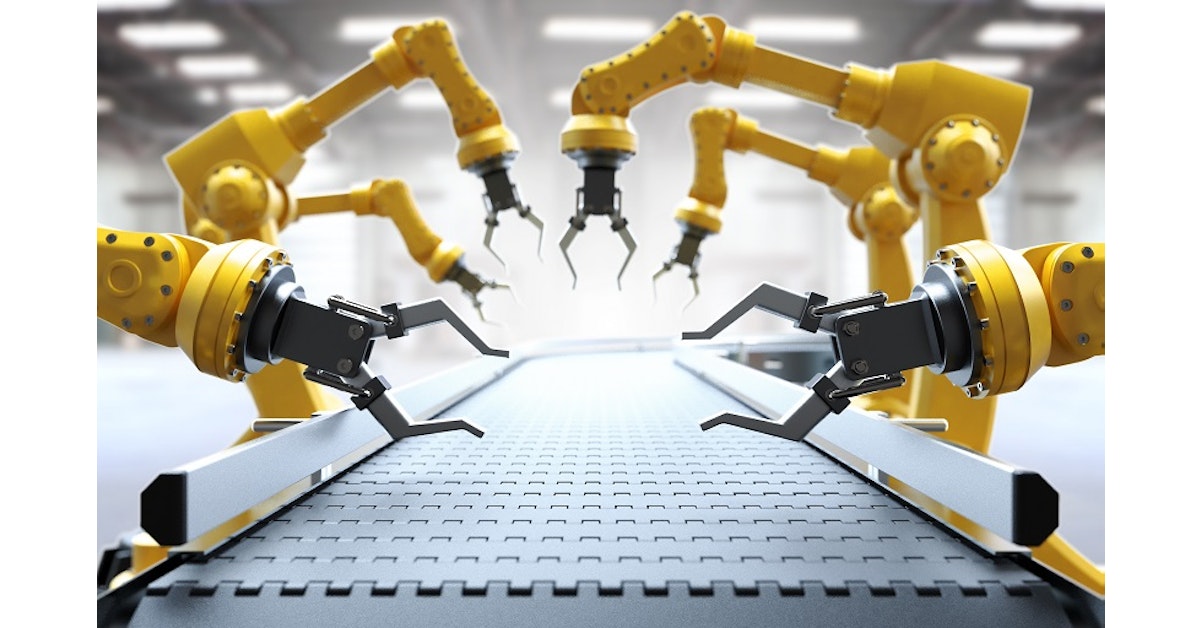 Robots are incredible inventions. They have been very beneficial to the production in industrial America. When robots had first entered the big picture of labor, they were first designed to do industrial jobs such as, welding or painting (like on automobiles.) In Susan Vargas’ Safety+Health article: “Robots in the workplace” Recently, however, technological advances have begun to allow for greater diversity of robotic systems in the workplace. “Now, in addition to traditional industrial robots, we have professional service robots, collaborative robots who work side by side with workers, and mobile autonomous robots in a wide range of industries and enterprises,” said Vladimir Murashov, senior scientist in the Office of the Director at NIOSH and a member of NIOSH’s newly formed Center for Occupational Robotics Research. Industrial robots typically have been used for tasks considered undesirable for human workers – what RIA Vice President Bob Doyle described as “the three Ds: dull, dirty and dangerous jobs.” In this capacity, automated systems offer considerable safety benefits to human workers. “Robots can help prevent injuries or adverse health effects resulting from working in hazardous conditions,” Murashov said. “Some examples are musculoskeletal disorders due to repetitive or awkward motions, or traumatic injuries. They can also prevent multiple hazards in emergency response situations such as chemical spills.”
Employers are just beginning to explore the possibilities for strategic human-robot partnerships. Because collaborative robots are intended to share workspaces with humans, safety measures are built into their design. However, despite these inherent protections, collaborative robots still pose significant risks. Introducing new technology in the workplace often is met with a degree of anxiety or skepticism. Employers thinking of adopting collaborative robotic systems should bear in mind that workers may have concerns about their safety or job security, and dispelling those fears can take time.
Employers are just beginning to explore the possibilities for strategic human-robot partnerships. Because collaborative robots are intended to share workspaces with humans, safety measures are built into their design. However, despite these inherent protections, collaborative robots still pose significant risks. Introducing new technology in the workplace often is met with a degree of anxiety or skepticism. Employers thinking of adopting collaborative robotic systems should bear in mind that workers may have concerns about their safety or job security, and dispelling those fears can take time.
Is robotic labor more efficient than human labor?
Is robotic labor more efficient than human labor?

We humans have been designed to work. It’s how we get things done in this world and it is what allows us to earn a roof over our heads --by getting for working of course-- but what happens when someone builds a machine to do our job for us. And just because the machine exists doesn’t necessarily mean that it is better than us. So that begs the question: Is a robots productivity worth more than human productivity.
According to the article, “Production Soared After This Factory Replaced 90% of Its Employees With Robots” a factory in China had replaced 90 percent of its workers with machines. This led to a increase in productivity by 250 percent and a reduction in defects by 80 percent. Supposedly this company need 650 employees to produce mobile phones. Now it only has 60 employees with 60 machines. According to the general manager of the company, the number of workers could even decrease to 20 and he claims that it won’t be long until other companies start following this trend. So judging by these numbers, humans just can’t compete in this type of work environment. Next I will research on how automation can harm human employment in the long run
We humans have been designed to work. It’s how we get things done in this world and it is what allows us to earn a roof over our heads --by getting for working of course-- but what happens when someone builds a machine to do our job for us. And just because the machine exists doesn’t necessarily mean that it is better than us. So that begs the question: Is a robots productivity worth more than human productivity.
According to the article, “Production Soared After This Factory Replaced 90% of Its Employees With Robots” a factory in China had replaced 90 percent of its workers with machines. This led to a increase in productivity by 250 percent and a reduction in defects by 80 percent. Supposedly this company need 650 employees to produce mobile phones. Now it only has 60 employees with 60 machines. According to the general manager of the company, the number of workers could even decrease to 20 and he claims that it won’t be long until other companies start following this trend. So judging by these numbers, humans just can’t compete in this type of work environment. Next I will research on how automation can harm human employment in the long run
Thursday, March 14, 2019
Man v. Machine
Is robotic labor more efficient than human labor?

We humans have been designed to work. It’s how we get things done in this world and it is what allows us to earn a roof over our heads --by getting paid for working of course-- but what happens when someone builds a machine to do our job for us. And just because the machine exists doesn’t necessarily mean that it is better than us. So that begs the question: Is a robots productivity worth more than human productivity.
According to the article, “Production Soared After This Factory Replaced 90% of Its Employees With Robots” a factory in China had replaced 90 percent of its workers with machines. This led to a increase in productivity by 250 percent and a reduction in defects by 80 percent. Supposedly this company needed 650 employees to produce mobile phones. Now it only has 60 employees with 60 machines. According to the general manager of the company, the number of workers could even decrease to 20 and he claims that it won’t be long until other companies start following this trend.
From the eyes of the employee it seems a bit cruel that these companies are replacing them with machines, but from a business standpoint it only makes sense to replace them. What makes these robots more valuable than humans --in terms of labor-- is that they don't have to take frequent breaks, they don't require a salary, and they can work overtime. So it only seems logical to make the switch to robotic.
So judging by these numbers, humans just can’t compete in this type of work environment. Next I will research on how automation can harm human employment in the long run
Wednesday, February 27, 2019
How do companies choose between hiring human labor or installing robotic labor?
Hunter Belvis

Source: ATS Automation
It seems that the installation of robotics has helped OEM Fabricators, but what impact has this had its more lifelike workers? According the article, fears have been raised by the media and labor advocates due to the possibility that automated labor will put people out of work. While this is true for low-skilled jobs, the good news is that it is short term. Also it is likely that automated labor can create more, higher salary jobs which require “higher education and advanced skill” according to Philies. In fact due to the higher production rates and profits, some firms have hired additional workers.
this is only a mere taste of automated labor and its potential costs, there is more research that can be done. In my next blog post I will be talking about the efficiency of automated labor compared to human labor.
Thursday, February 14, 2019
Man vs Machine
Hunter Belvis
Because of scarcity, people choose. All choices have an opportunity cost.
How do companies choose between hiring human labor or installing robotic labor?
Because of scarcity, people choose. All choices have an opportunity cost.
How do companies choose between hiring human labor or installing robotic labor?
-What are the prices of robotic labor?
-Is robotic labor more efficient than human labor?
-Could installing robotic labor potentially harm human employment in the long run?
Subscribe to:
Posts (Atom)