Showing posts with label Paulson. Show all posts

Monday, April 29, 2019

Wrap-It Up

Source
SYNTHESIZING RESEARCH ON MUSIC PRODUCTION

The economic principle I researched was Institutions are the "rules of the game" that influence choices. My overall research question was How have new incentives such as technology and business models influence music production over the past decades? Overall, I found that music production has become a lot more easier and accessible for society due to modern technology advances. Not only that, a whole industry was made creating an array of jobs.

After tons of research, I found all the sorts of jobs one can obtain that involves sound production. In my 5th Blog Post I discussed how one can become an audio engineer who mixes and masters sound at live events; a commercial producer who produces sounds for music, advertisements, games and film; a teacher who can teach others how to make music; as well as a sound designer who designs sounds for games and film.

I even learned about how since the technology is so accessible to us these days we can start making music off a laptop. In Blog Post 5, I defined the term “bedroom producing”. What defines a music producer is someone who oversees and guides the process of producing and recording a song. However, over the past few decades music production has become more accessible. High quality can music can be made on a laptop with little software. A bedroom producer is someone who produces music not using any sort of extensive software. It’s as if they don’t need a recording studio, and that it could all be done in a bedroom.

New technology has also made the process of recording music a lot easier. I mention several times throughout the series of my blog posts about DAW’s (Digital Audio Workspaces). However, I discussed what they are in great depth in Blog Post 4. Essentially, DAW’s provide pre-installed plugins where synths or any type of sound can be produced. This allows songs to be made in the matter of an hour. Back in the day it took much longer because it was very difficult to make that one sound you needed. Back in the day, you had to have a good knowledge of sound design where as opposed today you have that done for you.

Friday, April 12, 2019

Is it easier for the ‘average Joe’ to become a music producer these days?


Source
The economic principle I’m exploring is “Institutions are the ‘rules of the game’ that influence choices.”

My research question to help me study the economic principle is “How have new incentives such as technology and business models influence music production over the past decades?”

The article published in EDMProd titled “Becoming a Music Producer – What You Need to Know” demonstrates this economic principle by showing how new incentives in the music producing scene have made it easier for the average person to start producing music.

First, the article discussed about the topic of “bedroom producing”. What defines a music producer is someone who oversees and guides the process of producing and recording a song. However, over the past few decades music production has become more accessible. High quality can music can be made on a laptop with little software. A bedroom producer is someone who produces music not using any sort of extensive software. I can classify myself as a bedroom producer. When recording and producing a song for an artist of high calibre you’ll have several people working on the record. One person may be working with the artist and training them, another may be looking for ideas, and another may focus on the sonic quality of the track, mixing it down and getting it sounding right. The bedroom producer typically does all of this. They come up with musical ideas, arrange those ideas, and finalize them.

Second, the article discussed the possible career paths involving producing and how becoming a producer doesn’t confine you to just making music for artists. There are several other professions where the similar skills are necessary to work. One can become an audio engineer who mixes and masters sound at live events; a commercial producer who produces sounds for music, advertisements, games and film; a teacher who can teach others how to make music; as well as a sound designer who designs sounds for games and film.

Finally, the article I researched discussed about the process of learning and gathering the resources to become a music producer. Essentially, all you need to become a producer is a DAW (digital audio workspace) and a decent pair of headphones. Many of my favorite producers started producing with no previous musical experience. I had some from playing the guitar but after playing with the music software for weeks I was able to arrange melodies and actually start to make a beat. Fancy equipment like MIDI keyboards, software plugins, or audio interfaces will not make you a better producer, however they help you advance your sound and enhance creativity in your work.

Thursday, March 21, 2019

Source
The economic principle I’m exploring is “Institutions are the ‘rules of the game’ that influence choices.”

My research question to help me study the economic principle is “How have new incentives such as technology and business models influence music production over the past decades?”

The article published on Quora titled “Why does music (production) sound different as opposed to past decades” demonstrates this economic principle by talking about how new recording equipment has come to the surface and has allowed music to be made more efficiently, thus sounding more different. 

First, the article touched on what equipment was used back in the day and how it contributed to a different sound. For example, tracks were recorded on metal oxide. As the coating slowly sheds away after hours of recording and rewinding, the track loses its fidelity creating a more LoFi, vintage sound. Nowadays, it’s hard for bands to replicate the sound of other groups like Led Zeppelin or Aerosmith because the recording equipment used today is higher quality. Along with the recording tapes, tube based equipment was used. For example, guitar amplifiers back in the day were used with tube based technology. Having a tube amp nowadays is very expensive because the sound is so unique. This tube based equipment brought a distortion and saturation that no other recording equipment can replicate.

Second, the article discussed the equipment that is used currently in the recording process and how a rise of digital equipment has meant greater control in recording a track. Now,  every single instrument or sound can be compressed, equalized  and filtered.  While most musicians would say these advances have made music sound drowned out, it probably explains that clean sound you hear. Now that sound engineers can remove the distortion in tracks they can make the track sound clean and shiny. I concur with the statements brought forth by the article, I make beats for rap music and on all my tracks I use an equalizer, compressor, and some sort of filter to make my song sound professional

Third, the article talked about how with new technology we have a larger availability of sounds. Nowadays, music producers use DAW’s known as digital audio workspaces (The digital audio workspace I use is called FL Studio). DAW’s provide pre-installed plugins where synths or any type of sound can be produced. This allows songs to be made in the matter of an hour. Back in the day it took much longer because it was very difficult to make that one sound you needed. Back in the day, you had to have a good knowledge of sound design where as opposed today you have that done for you. That’s not to say there are people today that don’t create their own customized sound, but with new technology there is really not much of a need for that. When I make a song, it can sometimes take a few days or just an hour. It just depends on what in my head I am trying to achieve and whether or not I can make it sound like that. Some days I can completely translate the thoughts in my head on to my computer but sometimes I have a hard time doing that.

In my next blog post I will research the question: Is it easier for the ‘average Joe’ to become a music producer today than back in the day?

Monday, March 11, 2019

Is it easier to produce music in the modern era than back in the day?

Source
The economic principle I’m exploring is “Institutions are the ‘rules of the game’ that influence choices.”

My research question to help me study the economic principle is “How have new incentives such as technology and business models influence music production over the past decades?”

The article published on NPR called ‘How Much Does It Cost To Make a Hit Song’ demonstrates this economic principle by showing the costs associated with making popular music and how the costs have changed over the years.

First, the article discussed many of the methods that mainstream artists go through to make a song. I know that much of the music today that we listen to is actually not written by the artist, but after reading I was even more shocked and somewhat appalled to find out that the way these modern artists make music is highly inorganic. For example, when Rihanna decides to record some new music, they will hire a 40 person writing team to crank out lyrics to songs. Then all she does is listen to the music instrumental, find the one she likes, and pick the best lyrics and then she has a song. The writing camp for Rihanna cost over 200 thousand dollars, and each day they worked on making the album they spent at least 25 thousand dollars on average.

Second, the article went into more depth on how a song is made. When Rihanna is in the studio, she has a professional vocal coach that helps them sing certain lines. The cost of having a vocal coach ranges from $10,000-15,0000. The last step is to mix and master the song and that costs $15,000.

Third, the article spoke about how much it costs to advertise a new song or album to the public. It is estimated to cost about 1 million dollars. The reason it costs this much because everything needs to click at once. You want them to turn on the radio and hear Rihanna, turn on BET and see Rihanna, walk down the street and see a poster of Rihanna, look on Billboard, and even the iTunes chart.

In my next blog post, I will research the question: Why does music production sound different today as opposed to past decades?

Monday, February 18, 2019

What equipment is used nowadays that wasn't used back then? How has some equipment changed?

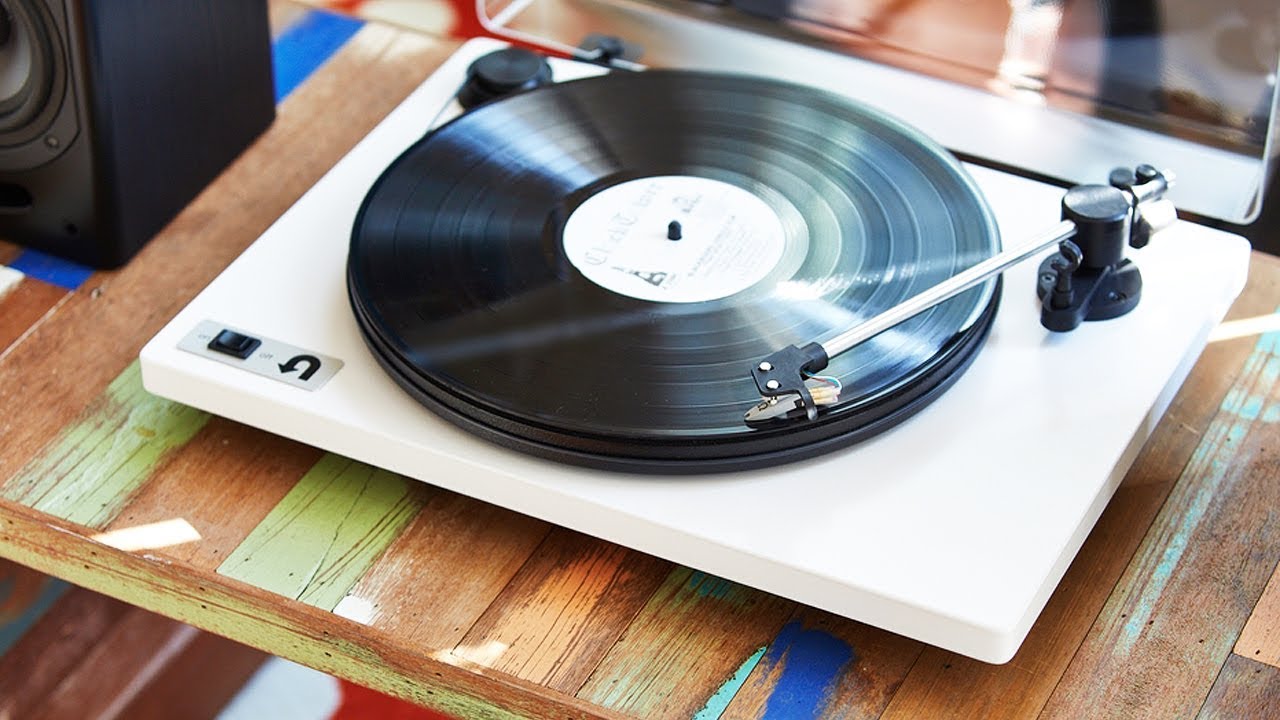
Image result for record player
Image Source
The economic principle I’m exploring is “Institutions are the ‘rules of the game’ that influence choices.”

My research question to help me study the economic principle is “How have new incentives such as technology and business models influence music production over the past decades?”

The article published on the website tech.co titled “How Evolving Tech Has Changed Music Production” demonstrates this economic principle because the article shows how the invention of the radio and evolving tech has propelled the music industry as well as how music production has changed due to broader incentives. 

Firstly, the article began to discuss how after World War I and II radios became widely commercialized to the public after its strong use by the American military. Radios became a household necessity for all families at this time. Families would listen to the news, sports broadcasts, shows, and music. The radio was one of the major components that spawned the music industry because radio stations would pay for music using their advertising money. As years pass by the record player became very popular and now selling records became a new source of revenue for artists as well as the music industry. After this major labels developed and began to dominate the industry.

Secondly, the article began to elaborate on the current state of music production today. The author talked about how many songs are made using DAW’s which is a digital audio work space. For instance Garageband is one of them but is something professionals don’t use because of the sound limitations. As they talked about the current equipment being used, it also talked about how nowadays it is easier for artists to get there music across a platform or audience because they no longer have to battle for shelf space in stores. This is due to music mostly being listened to on electronic devices.

Lastly, the author spoke on how new incentives and necessity made the music the way it is today. New technology from acoustic panels to mics can be capable of changing the business of music as well as how it is made. Day after day the music industry progresses therefore music production will have to get more advanced in the future.

In my next blog post I will research the question: How has the cost changed over the years?

Sunday, February 10, 2019

Music Production

  • The economic principle I will explore is: Institutions are the "rules of the game" that influence choices.
  • The overall question I will research to help explore the economic principle is: How have new incentives such as technology and business models influence music production over the past decades?
  • 3-4 sub questions that will help me answer my overall research question are: 
    •  What equipment is used nowadays that wasn't used back then? How has some equipment changed?
    •  Is it easier to produce music in the modern era than back in the day?
    •  How has the cost changed over the years? 
  • Links to 3-4 reliable resources that can help answer the research question: