Showing posts with label Davis. Show all posts

Tuesday, May 14, 2019

How have the recent changes in the music industry been affected by the principals of supply and demand

The Telegraph

While I may have had to adjust my research question to make my topic more broad and applicable, I have learned much about the way the music industry has been shaped by supply and demand in recent years. Firstly we have seen a large increase in the price of concert tickets because of the decrease in the sales of complementary goods. We have also seen much more broadly how streaming services have impacted the music industry. The increasing popularity of R&B/Hip Hop, the shortening of songÅ› length, and lastly why the industry is heading in the direction of streaming. All of these trends are closely related to supply and demand.

Streaming Services and the rise of R&B/Hip Hop

Refinery29
The economic principle I am researching is supply and demand In the music industry and how it both drives and shapes the music industry as a whole. In today's blog post I will discuss how music streaming services.

 In 2017 the long dominating genre of rock and roll gave up its title to R&B/Hip Hop for the first time in history. The Nielsen Music report according to Forbes.com for the first time showed R&B/Hip Hop take the leader-board with 25.1% of all music consumption while Rock is at 23% of total music consumption.

 Not surprisingly, the music streaming industry has no small role in this. Rock and roll is more popular with older generations while R&B/Hip is most popular with millenials and teenagers. The older generations also are more likely to listen to physical forms of music such as CDs and Records. There forms of music are expensive and have a limited supply because there is never an infinite supply of money.

 On the other hand, millenials and teenagers who are more likely to listen to R&B/Hip are also more likely to listen to music streaming services are able to listen to a much larger volume of music because streaming services do not charge per play or per song. Thus more R&B/Hip Hop music is consumer when compared to Rock because the effective supply of R&B or Hip Hop music is much larger.

 In my next blog post I will sum up and conclude all of my previous blog posts.

Why are songs getting shorter

valuewalk.com
The economic principle I am researching is supply and demand In the music industry and how it both drives and shapes the music industry as a whole.In today's blog post I will discuss why songs are getting gradually shorter.

 In recent years there has been a trend for songs moving from 8 minute sagas to shorter songs. According to Fortune.com, in the last 5 years the average song length has shortened by about 20 seconds, and considerable margin. The reason for this trend is music streaming companies; because streaming companies pay artists by the number of streams their song gets, a shorter song is less work for the artist and the label and also makes the same profit.

Now instead of stretching songs out to fill up as many albums as they can, as the physical mediums(CD´s) encouraged artists to do, shorter songs reap the same reward as shorter songs.

 Personally I do not see this as a problem artists have always adapted their songs to fit the medium they are using. In the 50s artists were forced to make their songs very short, all about 2-3 minutes because 33s and 45s records only allowed a limited number of songs. In order to make consumers think they are getting the most bang out of their buck they tried to fit as many songs as they could on each album.

 In my next blog post I will explore how demand shaped the development of music genres.

Streaming and the Music Industry

spotify.com

The economic principle I am researching is supply and demand In the music industry and how it both drives and shapes the music industry as a whole. In today's blog post I will discuss how streaming services have shaped the music industry.

 In recent years online music streaming services have dominated the market. In 2003 the market for music was controlled by CD´s: producing 94% if the industries revenue. Today 75% of the music industry's revenue comes from online music streaming (Econlife.com).

 Because of this jump from physical to electronic good´s the artists have less control over the price of the music they make. Basically Spotify pay the artists indirectly (by paying the record label) a fraction of their profits that are equal to the fraction of streams that each artist gets. The more streams an artist gets, the more profit they get. Spotify gets its revenues through ads and through those who upgrade to premium.

 Personally I do not like the direction the music industry is moving. The music industry today almost forces artists to put all their music on music streaming services. Songs on music streaming services are in large supply and songs are complementary good to each other: If you're listening to Ed Sheeran Ariana Grande can be a complementary good. If artist do not put songs on spotify they will get little or no attention from consumers.

In my next blog post I will explore why songs are getting shorter.

Friday, March 15, 2019

Why Is a Concert Ticket So Expensive

Image result for bruce springsteen concert
Live Design


The economic principle I am researching is demand, specifically for rock concerts. And how Prices are affected by complementary goods.

 Over the last decade we have seen a huge increase in the prices of concert tickets, specifically rock and roll concerts starting in 1997. Bruce Springsteen concerts are no exception. While it may seem anything but, the music industry like all others is governed by the laws of economics.

 There are many reasons that the price of concert tickets have gone up in recent years, but I will explore just a few today. When someone goes to a concert they usually will by complementaries, such as CDs, albums, t-shirts, ect. However in recent years music streaming services have taken over and sales of CDs and albums have dropped to almost zero. According to The Economics of Real Superstars: The Market for Rock Concerts in the Material World by Alan B. Krueger, ¨the decline in complementarities is the main cause of the recent surge in concert prices¨.

 This makes sense because if the amount of profits from commodities declined, artist must raise the prices of concerts if they want to have the same total profit. Even though Prices for Bruce Springsteen concerts are expensive often they can pale to other´s. Kruger cites that often ¨Springsteen, for example, sets his ticket prices well below their market Value¨. For some artists it is not all about the money.

 Artists are able to raise to price of concert tickets and people will still attend because for some superstars, the market for a rock concert is inelastic( According to Econlife.com), which means the demand curve is extremely steep because price will have little effect on quantity demanded. A good example of a markets elasticity is Springsteen on Broadway, which ticket prices for sold for more than Hamilton as prices soared above 500$.

 In my next blog post I will explore why people like the sound of Springsteen and why he has become so successful.
Wednesday, February 20, 2019

Demand for "The Boss"


Image result for bruce springsteen
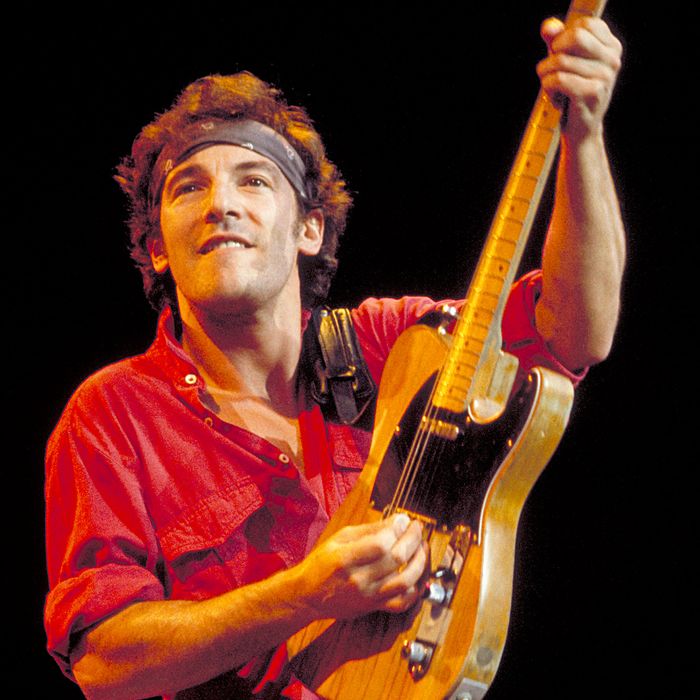
Bruce Springsteen in concert from"Vulture"


  • The Topic I am researching is demand, and how consumers learn and become interested in products.


  • How did Bruce Springsteen utilize demand to help him succeed as an artist?
  • 3-4 subquestions that will help me answer my overall research question are: 
    •  how did Bruce Springsteen start out
    • How did his producers market him
    •  why did Bruce Springsteen "make it" while others did not 
  • Links to 3-4 reliable resources that can help answer the research question: