Tuesday, May 14, 2019

How have the recent changes in the music industry been affected by the principals of supply and demand

The Telegraph

While I may have had to adjust my research question to make my topic more broad and applicable, I have learned much about the way the music industry has been shaped by supply and demand in recent years. Firstly we have seen a large increase in the price of concert tickets because of the decrease in the sales of complementary goods. We have also seen much more broadly how streaming services have impacted the music industry. The increasing popularity of R&B/Hip Hop, the shortening of songÅ› length, and lastly why the industry is heading in the direction of streaming. All of these trends are closely related to supply and demand.

Streaming Services and the rise of R&B/Hip Hop

Refinery29
The economic principle I am researching is supply and demand In the music industry and how it both drives and shapes the music industry as a whole. In today's blog post I will discuss how music streaming services.

 In 2017 the long dominating genre of rock and roll gave up its title to R&B/Hip Hop for the first time in history. The Nielsen Music report according to Forbes.com for the first time showed R&B/Hip Hop take the leader-board with 25.1% of all music consumption while Rock is at 23% of total music consumption.

 Not surprisingly, the music streaming industry has no small role in this. Rock and roll is more popular with older generations while R&B/Hip is most popular with millenials and teenagers. The older generations also are more likely to listen to physical forms of music such as CDs and Records. There forms of music are expensive and have a limited supply because there is never an infinite supply of money.

 On the other hand, millenials and teenagers who are more likely to listen to R&B/Hip are also more likely to listen to music streaming services are able to listen to a much larger volume of music because streaming services do not charge per play or per song. Thus more R&B/Hip Hop music is consumer when compared to Rock because the effective supply of R&B or Hip Hop music is much larger.

 In my next blog post I will sum up and conclude all of my previous blog posts.

Why are songs getting shorter

valuewalk.com
The economic principle I am researching is supply and demand In the music industry and how it both drives and shapes the music industry as a whole.In today's blog post I will discuss why songs are getting gradually shorter.

 In recent years there has been a trend for songs moving from 8 minute sagas to shorter songs. According to Fortune.com, in the last 5 years the average song length has shortened by about 20 seconds, and considerable margin. The reason for this trend is music streaming companies; because streaming companies pay artists by the number of streams their song gets, a shorter song is less work for the artist and the label and also makes the same profit.

Now instead of stretching songs out to fill up as many albums as they can, as the physical mediums(CD´s) encouraged artists to do, shorter songs reap the same reward as shorter songs.

 Personally I do not see this as a problem artists have always adapted their songs to fit the medium they are using. In the 50s artists were forced to make their songs very short, all about 2-3 minutes because 33s and 45s records only allowed a limited number of songs. In order to make consumers think they are getting the most bang out of their buck they tried to fit as many songs as they could on each album.

 In my next blog post I will explore how demand shaped the development of music genres.
Streaming and the Music Industry

spotify.com

The economic principle I am researching is supply and demand In the music industry and how it both drives and shapes the music industry as a whole. In today's blog post I will discuss how streaming services have shaped the music industry.

 In recent years online music streaming services have dominated the market. In 2003 the market for music was controlled by CD´s: producing 94% if the industries revenue. Today 75% of the music industry's revenue comes from online music streaming (Econlife.com).

 Because of this jump from physical to electronic good´s the artists have less control over the price of the music they make. Basically Spotify pay the artists indirectly (by paying the record label) a fraction of their profits that are equal to the fraction of streams that each artist gets. The more streams an artist gets, the more profit they get. Spotify gets its revenues through ads and through those who upgrade to premium.

 Personally I do not like the direction the music industry is moving. The music industry today almost forces artists to put all their music on music streaming services. Songs on music streaming services are in large supply and songs are complementary good to each other: If you're listening to Ed Sheeran Ariana Grande can be a complementary good. If artist do not put songs on spotify they will get little or no attention from consumers.

In my next blog post I will explore why songs are getting shorter.

How Has Technology Changed Music Over The Last 20 Years?

Image result for technology in music
musictech
During my research on this topic, I focused on three main areas.  How our methods of listening to music have changed, how producers methods of creating music have changed, and how our experiences at concerts have changed.  In the past 20 years, technology has had such a great affect on every aspect of music.  From how the song gets written, to how it gets recorded, to how it gets put out for people to enjoy, technology has affected every step of this process.  Not to mention the incredible visual stimulation that many artists add into their concerts.  Every single light pattern, color, and blast of fire that you see up on stage was programmed by a team of people behind a computer.  Not to mention the animations that many artists have playing on a giant screen behind them throughout their entire show.  The technology created in the past twenty years has been instrumental to the evolution of music production, and every aspect of the music creation process.  After seeing what has happened just in my lifetime, I am very excited to see what is going to happen in the music world in the next 20-30 years.

How Has Technology Changed The Way We Experience Live Music?

Image result for edm concert
Live 365

The economic principle that I am researching is that people generally respond to incentives in predictable ways, and how technology has changed our methods of listening to music.

My research question to help me study this topic is how technology has changed the way we experience live music.

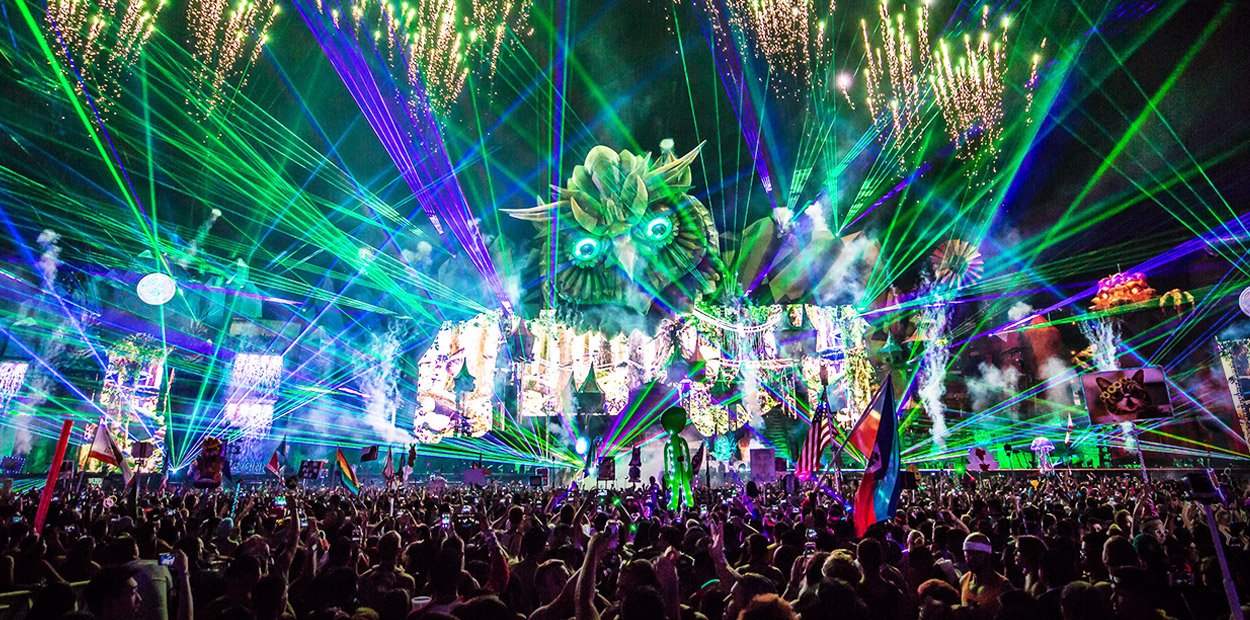
With the development of more powerful technology, the lighting and other visuals that are shown during concerts have became incredibly better.  For example, in the picture above, there are lights of all different colors arranged in incredible patterns all being controlled by some guys sitting on a computer. Additionally, there is smoke and fire that can shoot up from points in the stage.  None if this would have been able to happen in the past.  Additionally, technology has made it possible to design much more complex stages which are very popular at music festivals.  Engineers are able to model what they want the stage to look like on a computer and now have the technology and machines to build it exactly how they want to.  These are the sort of behind the scenes things that we as concert listeners take for granted.  Lots of hard work goes into the technological aspect of a concert, and 90% of the things we see at concerts today probably couldn't have been done at a concert 20 years ago.  

How will the MLB regulate its players from using PED's?

Image result for barry bonds muscles
Barry Bonds (Source: mccoveychronicles.com)

The MLB perhaps is the sport where PED's are most prominent, steroids in particular.
In an article written by Scholarship.edu, they talk about how the rules/policy have not done too much. "Of course when most people refer to baseball's "Steroid Era" they mean the period of time from the late 1980's until the mid-2000's, when anabolic steroid use pervaded the sport. Major League Baseball has since cleaned up its act by instituting its Joint Drug Prevention and Treatment Program, but that hasn't stopped some players from using performance enhancing drugs in violation of federal law and baseball policy."
With my economic policy being Institutions, "rules of the game" so to speak, the rules have clearly been broken many times by these players. For them, it is a way to rack up their home run total which in return would land them bigger contracts. In today's game, we see still see many big time players getting busted. Alex Rodriguez of the New York Yankees is a great example. He was a stud for the Yanks for over a decade. Just like anything else in life, the players look at their careers and the MLB as a business. They will do anything they can to perform better so they can make more money as a result. "Since Major League Baseball lacks subpoena power, there's only so much they can do to stop tnulti-millionaires who have the desire to gain any advantage they can." - T Quinn in the article by Scholarship.edu.

My prediction is that MLB players will still take the risk of using these drugs to perform at higher levels.

Next blog post: How will Tour De France officials regulate players from using PED's?